What You Hear Is What You Feel: The Rise of Sound Design as Storytelling in Independent Film

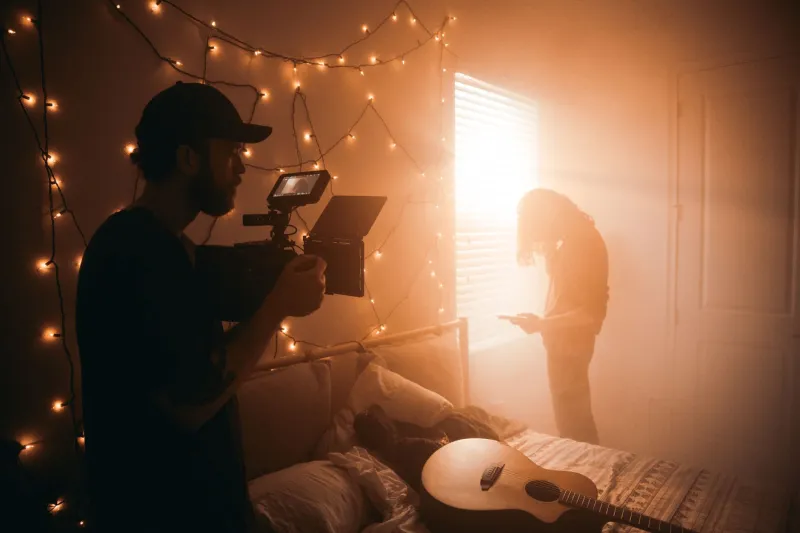
Photo by Photo by Jesman fabio on Unsplash on Unsplash
There is a moment in many independent films — quiet, unhurried, often easy to overlook — where the image on screen and the sound beneath it seem to fuse into something larger than either could achieve alone. A door closes in an empty hallway. Rain settles on a roof. A character's breathing shifts almost imperceptibly. These are not accidents. They are decisions, made by artists who understand that the ear processes emotion before the mind can name it.
For decades, sound in filmmaking was treated as a finishing concern — something to be addressed after picture lock, often with whatever resources remained. In independent production, where financial constraints are not the exception but the rule, this approach produced films that looked striking and sounded thin. That dynamic is changing. Across the American independent landscape, a generation of filmmakers and dedicated sound collaborators are repositioning audio as a primary creative language, and the results are earning serious critical attention.
The Invisible Architecture
Sound design operates in a register that most viewers never consciously access, which is precisely what makes it so effective. Unlike a visual choice — a close-up, a color grade, a specific location — audio works beneath deliberate perception. It shapes mood before the audience has formed an opinion. It signals danger, tenderness, dislocation, and longing through frequencies and textures that bypass rational analysis.
For independent filmmakers working without the resources to build elaborate sets or shoot in multiple countries, this quality is not merely useful — it is transformative. A single room, lit simply and shot on a modest camera, can become psychologically expansive when the sound design is layered with intention. The ambient hum of a refrigerator can carry loneliness. The absence of music during a confrontation can produce more tension than any score.
This is the foundational insight that a growing number of indie productions have absorbed: constraint in the visual domain does not have to mean constraint in emotional scope, provided the audio dimension is treated with equivalent seriousness.
When Sound Becomes Character
Several American independent films released in recent years have demonstrated this principle with unusual clarity. Films operating at the lower end of the production budget spectrum have nonetheless delivered audio experiences that critics and audiences describe in terms usually reserved for performance or cinematography. Sound, in these cases, is not accompanying the story — it is telling it.
Consider the structural role that ambient sound plays in intimate domestic dramas, where the noise of an ordinary household — a television in the next room, the rhythm of someone washing dishes, traffic filtering through a window — establishes an entire social world without a single line of dialogue. Or the use of diegetic music in character studies, where what a protagonist chooses to listen to, and how that music bleeds into scenes where they are absent, traces an emotional biography across the film's runtime.
Sound designers working in the independent space frequently describe their work in terms that echo those of actors and writers. They speak of a character's sonic signature — the way a particular person moves through acoustic space, the sounds associated with their presence and their absence. When a film commits to this level of specificity, the audience registers it as emotional truth, even without understanding its technical origin.
Breaking Into the Field
The pipeline for sound professionals in independent cinema looks markedly different from the path into large studio productions. Many of the most accomplished independent sound designers working in the United States today came to the discipline through unconventional routes — music production, radio, game audio, or self-directed study using tools that have become substantially more accessible over the past decade.
Digital audio workstations that once required significant capital investment are now available to emerging artists at a fraction of their former cost. Field recording, once dependent on expensive proprietary equipment, can now be accomplished with professional-grade results using gear within reach of early-career practitioners. Online communities have accelerated the sharing of knowledge in ways that compress what once took years of mentored experience into more condensed learning curves.
This democratization has not eliminated the craft differential between experienced and inexperienced practitioners — nuanced sound design still demands years of trained listening and disciplined decision-making — but it has removed several of the structural barriers that once kept talented artists out of the field. The result is a broader, more diverse pool of sound collaborators available to independent productions that are themselves operating outside traditional industry structures.
Prioritizing Audio from the Start
For filmmakers at the early stages of a project, the most significant shift in approach is one of timing rather than technique. Sound design that functions as genuine storytelling cannot be retrofitted onto a film that was conceived and shot without it in mind. The decisions that enable powerful audio — location scouting with acoustic properties in consideration, production recording that captures usable ambient texture, editorial pacing that gives sound room to breathe — must be made at the earliest stages of production.
This requires a degree of collaboration between directors and sound professionals that remains less common than it should be. Directors who have developed strong working relationships with sound designers consistently describe those partnerships as among the most creatively generative of their careers. When a sound collaborator is present during pre-production conversations, reading the script and thinking about its sonic possibilities before a single frame is shot, the film that emerges reflects that integration.
Budget allocation is another practical consideration. Independent productions that treat sound as an afterthought tend to assign it a proportionally small share of their resources. Films that have achieved notable audio distinction often reflect a deliberate decision to invest in the discipline — whether through hiring an experienced sound designer early, budgeting adequately for post-production audio work, or committing to a composer relationship that begins well before the editing process concludes.
The Audience's Unconscious Agreement
What viewers ultimately experience, when sound design is functioning at its best, is a kind of unconscious agreement with the film's emotional logic. They do not think, in the moment, about what they are hearing. They simply feel the film working on them — feel its tension, its grief, its relief, its strangeness — and attribute that feeling to the whole of what they are watching.
This is the quiet ambition of serious sound work in independent cinema: to become invisible precisely by becoming essential. The filmmakers and sound designers who are advancing this discipline in the American independent space are not chasing recognition for their specific contributions, though that recognition is increasingly forthcoming. They are pursuing something more fundamental — the conviction that a film which sounds true will feel true, and that feeling is the only thing an audience ever really takes home with them.
In a production environment where so many variables resist control, sound remains one of the most responsive instruments available to an independent filmmaker. It is also, for those willing to treat it with the seriousness it deserves, one of the most profound.