When Your Best People Leave: The Hidden Strength Inside Independent Cinema's Revolving Door
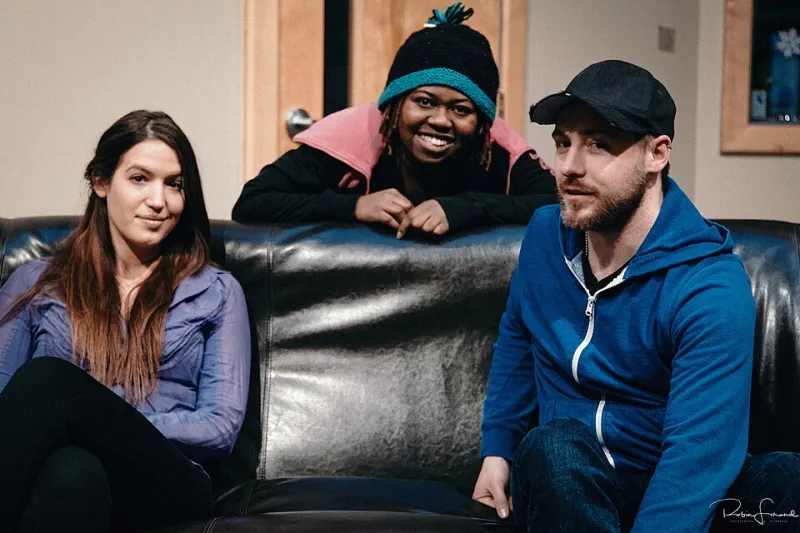
Photo: Robin Férand, CC BY 3.0, via Wikimedia Commons
There is a particular kind of grief that independent filmmakers rarely discuss in interviews. It is not the grief of a rejected grant application or a distribution deal that collapsed at the last moment. It is something quieter and, in many ways, more disorienting: the moment a trusted collaborator — the cinematographer who understood light the way you understood language, the editor who knew when a scene needed silence — accepts an offer from a larger production and moves on.
In independent cinema, these departures are not anomalies. They are, for many directors, a recurring feature of the landscape. And yet the conversation around them tends to be muted, folded into broader discussions about the industry's structural inequities rather than examined on their own terms.
The Architecture of Trust
What makes creative partnerships in independent film so distinctly fragile is precisely what makes them so powerful. Unlike studio productions, where roles are compartmentalized and hierarchies are formalized, independent filmmaking is built on proximity. Directors and their key collaborators often develop a shared vocabulary over years — sometimes over a single feature made on a shoestring budget in a borrowed location. That intimacy is the engine of the work.
It is also, inevitably, the thing that makes those collaborators attractive to other productions. A gaffer who learned to stretch a $40,000 lighting budget across a thirty-day shoot is exactly the kind of resourceful professional that a mid-tier studio picture wants on its crew. A sound designer who developed a signature approach to ambient texture on a debut documentary is a candidate for something much larger the moment that documentary earns recognition.
The independent filmmaker, in this sense, functions as an inadvertent training ground. The skills forged under constraint — the ability to solve problems creatively, to communicate across disciplines, to hold a coherent artistic vision under pressure — are precisely the skills that translate upward. Success, in independent cinema, tends to export its own talent.
The Departure as Data
Directors who have navigated multiple production cycles describe the experience of losing a key collaborator in terms that are worth taking seriously. The initial response is often logistical panic: who will fill this role, and how quickly? Beneath that, however, lies something more instructive.
When a close collaborator leaves, it forces a filmmaker to articulate — often for the first time — exactly what that person contributed. This is not as straightforward as it sounds. In the heat of production, contributions blur together. The editor's instinct and the director's instinct become difficult to separate. A departure creates a kind of forced clarity, compelling the filmmaker to identify which creative impulses were genuinely their own and which were the product of a specific collaborative dynamic.
For some directors, this reckoning is uncomfortable. For others, it becomes the foundation of a more deliberate creative practice. They begin to understand their own aesthetic not as something that emerged organically but as something that was co-constructed — and that can, with intention, be rebuilt.
Building for Transition
A small but notable cohort of independent filmmakers has begun approaching team-building with an almost architectural awareness of impermanence. Rather than constructing a crew around the assumption of long-term continuity, they design their collaborative structures to absorb change.
This approach has several practical dimensions. It involves mentorship — deliberately bringing in emerging crew members and integrating them into the creative process early, so that institutional knowledge is distributed rather than concentrated. It involves documentation, not in the bureaucratic sense, but in the sense of articulating a production's aesthetic goals clearly enough that a new collaborator can orient themselves without starting from zero. And it involves a certain philosophical acceptance: that the people who help you make your first film are not necessarily the people who will make your fifth.
This last point is perhaps the most counterintuitive. Loyalty, in independent cinema, is often treated as an unambiguous virtue — and in many respects it is. But there is a version of loyalty that functions as stasis, a mutual reluctance to acknowledge that both filmmaker and collaborator may have outgrown the original terms of their partnership. The directors who navigate transitions most successfully tend to be those who can distinguish between loyalty as commitment and loyalty as inertia.
The Alumni Effect
There is another dimension to this dynamic that receives even less attention: what happens after the departure. Collaborators who leave independent productions for larger projects do not, in most cases, disappear entirely. They carry with them the sensibility of the work they helped create. And they sometimes return — not as the same collaborators they were, but as more experienced ones, bringing skills and perspectives acquired in entirely different contexts.
Beyond individual returns, there is what might be called an alumni effect. A filmmaker whose early collaborators go on to build their own careers creates, over time, a diffuse network of people who share a common creative lineage. That network can be a source of referrals, of informal mentorship, of unexpected collaborations on future projects. The revolving door, viewed from a sufficient distance, begins to look less like a wound and more like a circulation system.
Some of the most resilient independent production communities in the United States — in cities like Austin, Chicago, and the Pacific Northwest — have this quality. They are not defined by stable, unchanging teams but by a fluid exchange of talent that maintains a coherent artistic culture even as individual careers diverge. The community becomes the constant; the team becomes the variable.
What Remains
The question that independent filmmakers are ultimately left with, when a valued collaborator moves on, is not simply how to replace them. It is a more searching question: what, exactly, was the work we made together, and what does it tell me about the work I am capable of making alone — or with someone new?
That question does not have a comfortable answer. But it is, for many directors, among the most generative ones they will ever ask. The collaborators who leave take something irreplaceable with them. They also, in leaving, return something to the filmmaker — a clearer sense of authorship, a more honest understanding of creative dependency, and, sometimes, a resilience that no stable team could have produced.
In independent cinema, as in the stories it tells best, the most important growth tends to happen in the aftermath of loss. The revolving door is not a failure of community. It is, in many cases, the community doing exactly what it was built to do.