Built Together, Built to Last: How Collaborative Networks Are Quietly Outperforming the Star-Driven Studio Model
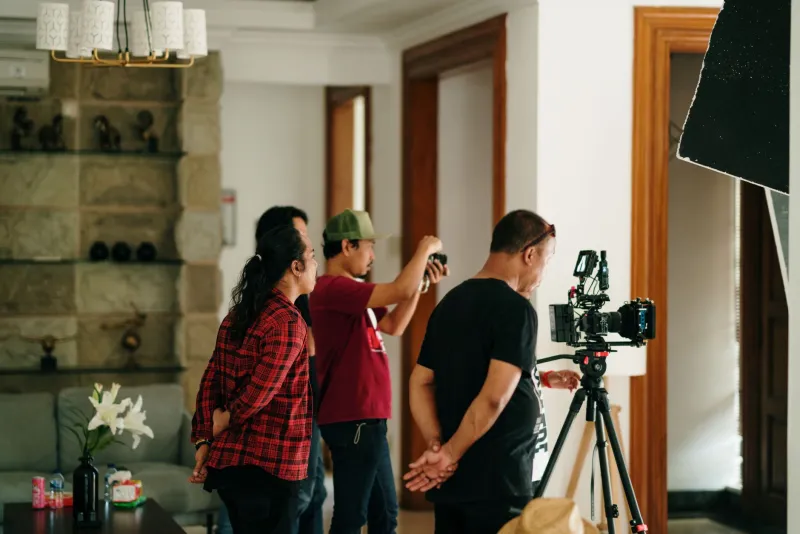
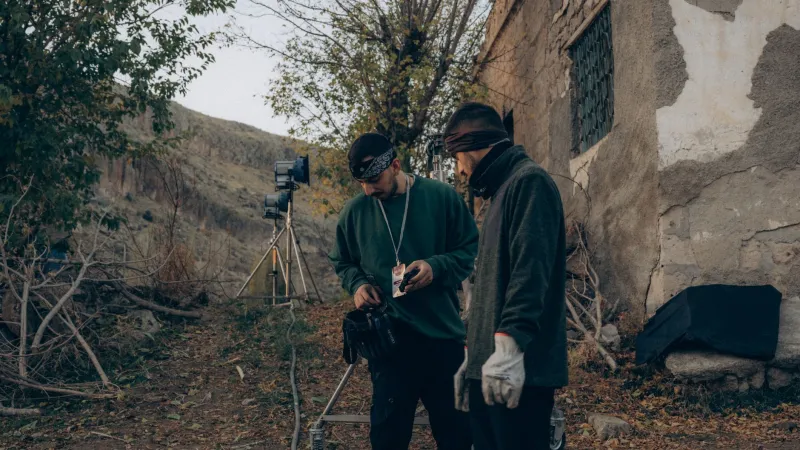
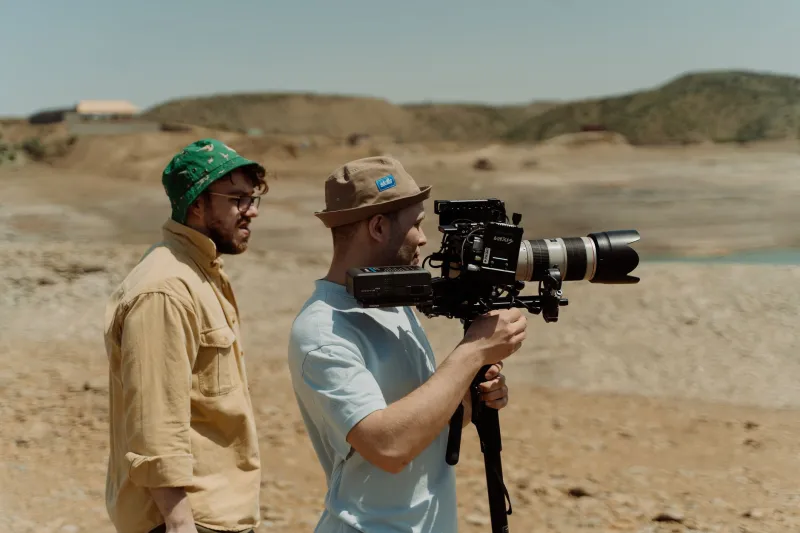
There is a particular kind of shorthand that develops between people who have made something difficult together. A glance across a monitor that replaces a paragraph of notes. A composer who already knows, before a single frame is locked, that the director prefers silence over score in moments of grief. An editor who can feel the rhythm a cinematographer was reaching for even when the footage falls short of it. This shorthand cannot be purchased. It cannot be assembled from a list of impressive credits. It is built, incrementally, across shared work — and it may be the most undervalued resource in American independent cinema today.
While the broader entertainment industry continues to orbit around marquee names and franchise-driven talent packages, a quieter structural shift is occurring at the edges of that system. Independent filmmakers across the country are deliberately constructing their productions around interconnected creative communities — recurring collaborators who move together across multiple projects, accumulating not just professional familiarity but something closer to a shared artistic language. The results, both creatively and economically, are difficult to ignore.
The Limits of the Transactional Model
The conventional approach to assembling an independent film crew mirrors, in miniature, the logic of the studio system: identify the best available talent for each role, negotiate terms, execute the project, and disband. It is efficient in theory. In practice, it generates enormous friction. Every new collaboration requires a calibration period — time spent learning working styles, establishing trust, negotiating unspoken hierarchies. On a studio production with a generous schedule and a deep budget, that friction is absorbable. On an independent film operating with compressed timelines and limited resources, it can be quietly catastrophic.
Beyond the practical costs, the transactional model distributes creative ownership unevenly. When a cinematographer arrives for a single engagement, their investment in the film's success is necessarily bounded. When that same cinematographer has worked with a director across three films, has a stake in the collective reputation they are building together, and expects to collaborate again on the next project, the nature of their investment changes entirely. The work becomes personal in a way that no contract can manufacture.
How the Network Actually Functions
The collaborative networks emerging within independent cinema are not formal organizations. They rarely have names, bylaws, or official membership rosters. What they have is pattern — a recognizable tendency for the same constellation of creative people to reappear across a body of work, each project deepening the connective tissue between them.
Consider the working model that has developed around several prominent American independent productions over the past decade. A director makes a first feature with a cinematographer they met during a short film. That film reaches a modest festival audience but earns genuine critical attention. For the second project, the same cinematographer returns, and brings along a sound designer they have worked with on commercial projects. The director's producer from the first film connects them with an editor who shares a sensibility. By the third project, this loose cohort has developed something structural — a network of trust that functions, in many ways, more reliably than the formal infrastructure of a studio production.
Crucially, the financial architecture of these arrangements tends to be more equitable than the hierarchical studio model. Deferred compensation agreements, profit-sharing arrangements, and co-producer credits distributed across collaborators mean that when a film succeeds, its rewards travel more broadly. When it struggles, the risk is similarly distributed. This is not altruism — it is a rational response to the economics of independent production, where the prospect of significant upfront payment is rarely available to anyone.
The Creative Dividend
The practical benefits of sustained collaboration are well-documented. What receives less attention is the specifically creative dividend these networks generate — the degree to which deep familiarity between collaborators enables risk-taking that would be impossible in a more transactional context.
A cinematographer who is working with a director for the first time has a professional incentive toward safety. Unconventional choices require justification; failure reflects badly on a reputation that has not yet been anchored by shared success. A cinematographer who has built three films with the same director operates from an entirely different position. They understand which failures the director can metabolize and which they cannot. They know when a risky instinct is worth pursuing and when it reflects a momentary confusion rather than genuine insight. This accumulated understanding creates space for the kind of creative experimentation that produces genuinely original work.
The same logic applies across every creative role. An editor who knows a director's relationship to silence, pacing, and emotional disclosure will make different — and often braver — choices than one encountering that sensibility for the first time. A composer who has scored two films for the same director arrives at the third with a developed vocabulary that neither party needs to explain.
What the Studio System Cannot Replicate
It is worth being precise about what distinguishes these collaborative networks from the long-term working relationships that exist within studio productions. Studio collaborations are mediated by institutional hierarchy. The studio's financial investment confers authority over creative decisions in ways that inevitably constrain the most idiosyncratic impulses of individual collaborators. The network model, by contrast, distributes authority more horizontally — not without friction, but without the overriding pressure of institutional interest.
This is not a romanticization of independent cinema's structural limitations. The absence of institutional support creates genuine hardships that no amount of collaborative spirit resolves. What it does create, however, is a context in which creative decisions are made primarily on creative grounds — and in which the people making those decisions have a direct stake in their outcomes.
Building for the Long Term
The filmmakers most successfully employing this model share a particular orientation toward their careers: they are building bodies of work rather than optimizing individual projects. This distinction matters more than it might initially appear. A filmmaker whose primary goal is to maximize the visibility of a single film will make different decisions — about collaborators, about compromise, about the distribution of credit and compensation — than one who understands their current project as one node in a larger, ongoing network of relationships and work.
This longer view is itself a form of artistic integrity. It resists the pressure, common in independent cinema's festival-driven ecosystem, to treat each film as a potential breakthrough that must be positioned and packaged for maximum impact. It accepts, instead, that the most durable creative reputations are built gradually, through accumulated work that reflects a consistent and developing sensibility — work that is almost impossible to produce without the kind of deep collaborative infrastructure these networks provide.
The honeycomb, as a structural form, derives its strength not from any single cell but from the integrity of the connections between them. Independent cinema's most resilient productions are beginning to reflect something similar: not the singular vision of an isolated auteur, nor the assembled competence of a transactional crew, but the compounded intelligence of people who have learned, over time, how to make something extraordinary together.